
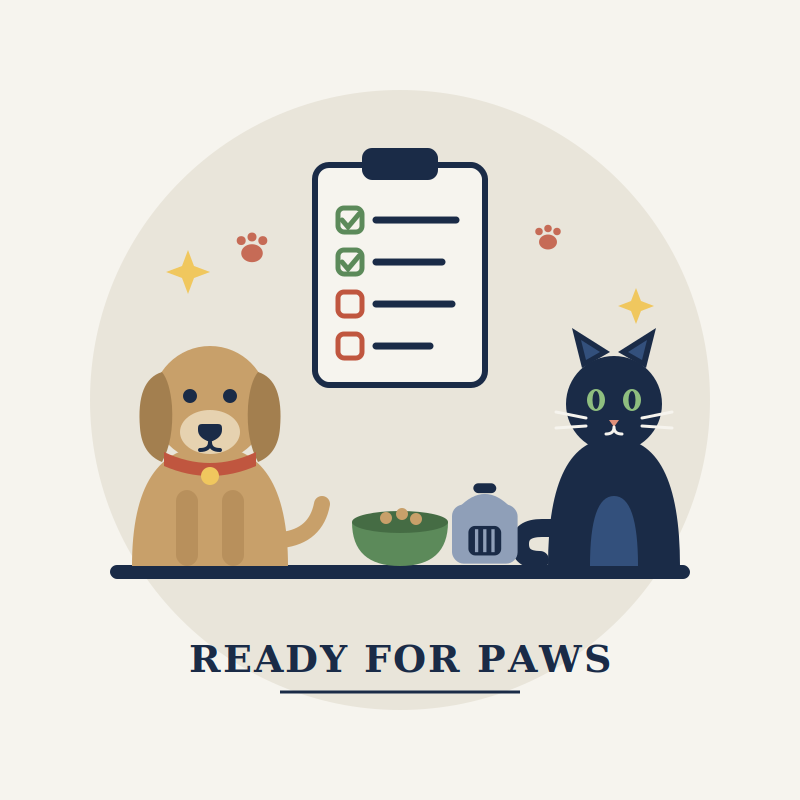
Bringing home a dog or cat is equal parts joy and mild panic: the pet shop has three aisles of things that all claim to be essential. They aren’t. This new pet owner checklist cuts the list down to what your animal actually needs in the first month — plus the Portugal-specific paperwork that many guides skip entirely.
The New Pet Owner Checklist: Before Your Pet Arrives
Have these ready on day one — everything else can wait:
For any pet:
- Food — ideally the same brand the shelter or breeder used. Switch gradually later if you want; a sudden change plus a new home is a recipe for stomach trouble.
- Two bowls — one for water, one for food. Stainless steel or ceramic beats plastic: easier to clean, no scratches for bacteria to hide in.
- A carrier — legally required for transporting pets in cars in most situations, and essential for vet visits. Buy it before the pet, not after.
- A designated sleeping spot — a bed, a blanket, a quiet corner. It doesn’t need to be fancy; it needs to be theirs.
Cats additionally: a litter box (one per cat, plus one spare is the golden rule), litter — see our cat litter guide for choosing the right type — and a scratching post, unless you’re donating your sofa.
Dogs additionally: a collar with an ID tag, a lead, and poop bags. That’s genuinely it for day one.
And one non-shopping item: pet-proof the flat. Ten minutes on your knees at pet height reveals what a checklist can’t: dangling cables, toxic houseplants (lilies are dangerous for cats), open balconies, cleaning products in low cupboards, and small swallowable objects. Fixing these before arrival is free — and cheaper than any vet emergency.
First Week: Vet, Chip, Paperwork
Portugal has clear legal requirements, and they’re cheap to meet but expensive to ignore:
Microchip + SIAC registration. Every dog, cat and ferret in Portugal must be microchipped and registered in the national SIAC database. If you adopt from a shelter, this is usually done — but confirm the registration was transferred to your name, not just implanted. An unregistered chip is a common and easily fixed oversight.
First vet visit within the first week. Even if the pet looks healthy: baseline check, vaccination plan, deworming schedule. Bring whatever health booklet (boletim sanitário) came with the animal.
Vaccinations. Rabies vaccination is mandatory for dogs in Portugal; core vaccines for cats and dogs follow a schedule your vet will set. Budget for two or three visits in the first months if you have a puppy or kitten.
Sterilisation conversation. Ask the vet about timing. Many municipalities run subsidised sterilisation campaigns — worth a question at your junta de freguesia.
First Month: Routine Beats Gadgets
The most valuable things you can give a new pet cost nothing:
A fixed routine. Same feeding times, same walk times, same rules from every family member. Pets settle faster when the world is predictable.
A slow introduction. One room first for cats; short calm sessions for dogs. Resist the urge to show them off to every visitor in week one.
Gradual alone-time training. Start with minutes, not hours. This single habit prevents the most common behaviour problem — separation anxiety — before it starts.
Basic grooming habit. A soft brush a few times a week, touching paws and ears so future nail trims and vet exams aren’t a wrestling match.
What NOT to Buy Yet (Honesty Corner)
Half the pet aisle is aimed at you, not the animal:
- Clothing and costumes. Except for short-haired dogs in genuinely cold weather, this is decoration.
- Automatic feeders and fountains. Useful later for some households; pointless before you know your pet’s habits.
- A mountain of toys. Buy two or three, see what your pet actually likes (chasers, chewers and cuddlers are different personalities), then invest. As we noted in our guide on how eco products save money, one durable toy beats five broken ones.
- Breed-specific “premium” everything. A €40 ceramic bowl feeds a cat exactly as well as a €6 one.
What the First Month Really Costs in Portugal
Rough 2026 numbers for planning: adoption fee €0–100 (shelters often include chip and first vaccines), microchip + SIAC if needed €25–50, first vet visit + vaccines €50–120, starter supplies €60–120, food for a month €20–50 depending on size. Realistic total: €150–400 — front-loaded, then dropping to food, litter and an annual vet check. Sterilisation (€60–200 depending on species, sex and clinic) is the other big early cost.
FAQ
What’s the single most forgotten item on a new pet owner checklist? The carrier. Everyone remembers food and toys; then the first vet trip happens in a cardboard box held together with hope.
How long does a new pet take to settle in? The rough rule for rescues is 3-3-3: three days of stress, three weeks of learning the routine, three months to feel fully at home.
Should I buy pet insurance in Portugal? Worth pricing once you know the pet’s health baseline. For young animals it’s cheap; for dogs of certain breeds, liability insurance is mandatory — ask your vet.
Cat or dog for an apartment? Both can thrive. The honest difference is time: cats forgive a busy week; dogs need walks every single day, weather and mood notwithstanding.
Setting up for a new arrival? Browse our Pet Shop for the essentials that made this checklist — and sign up on our homepage to get 10% off at launch.