
If you’ve ever stood in front of the colourful bins on a Portuguese street wondering whether a pizza box counts as paper, you’re not alone. Recycling in Portugal is actually well organised — but nobody hands you the manual. This guide explains what goes in each ecoponto, what absolutely doesn’t, and the handful of mistakes that quietly ruin whole containers of recycling.
The Ecoponto System: Three Colours, Three Rules
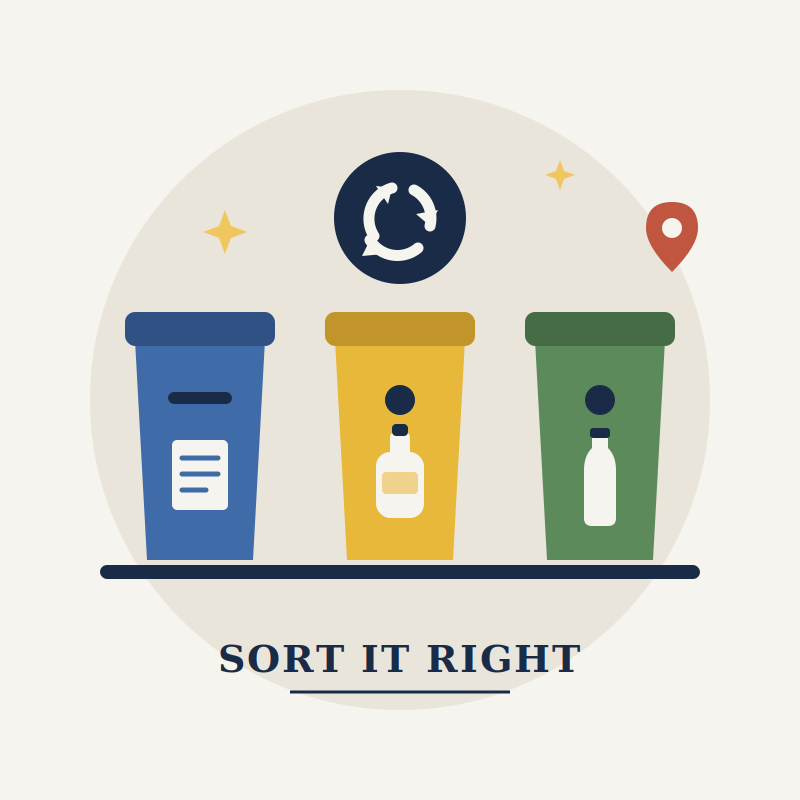
Across Portugal you’ll find clusters of large street containers called ecopontos, almost always in the same three colours:
Blue (papelão) — paper and cardboard. Newspapers, magazines, cardboard boxes (flattened!), paper bags, egg cartons, office paper. NOT: dirty pizza boxes, paper towels, tissues, or paper cups with plastic lining.
Yellow (embalão) — packaging. Plastic bottles, yoghurt pots, plastic bags and film, metal cans, drink cartons (Tetra Pak), aluminium foil, aerosol cans (empty). This bin is for packaging, not for plastic in general — a broken plastic toy or bucket does NOT belong here.
Green (vidrão) — glass. Bottles and jars only. NOT: drinking glasses, window glass, mirrors, light bulbs, ceramics. These melt at different temperatures and contaminate the batch.
The single most useful habit: empty, don’t wash. Containers should be free of food and liquid, but they don’t need to be dishwasher-clean — a quick scrape or rinse is plenty. Water is a resource too.
The Mistakes Almost Everyone Makes
The greasy pizza box. Grease-soaked cardboard can’t be recycled as paper. Tear off the clean lid for the blue bin; the greasy base goes to general waste (or compost, if you have one).
Bagged recycling. Don’t tie your recyclables inside a closed plastic bag before dropping them in the yellow bin — loose items sort better. Empty the bag in, then drop the bag in too.
“Wish-cycling”. Tossing something in and hoping it’s recyclable does more harm than good. When in doubt, general waste is the safer choice for the sorting plant.
Lids on glass bottles. Metal and plastic caps go in the yellow bin, the glass bottle in the green one. (Corks are a separate story — many supermarkets collect them.)
Cat litter in the wrong place. Used litter — even plant-based — goes in general waste (indiferenciado), never in recycling or the brown bio bin, and never down the toilet. We covered this in detail in our cat litter guide.
Beyond the Three Bins
Batteries — o pilhão. Small red containers (often attached to ecopontos) or collection boxes in supermarkets take household batteries. Never in general waste: one battery can contaminate soil for years.
Electronics and appliances. Shops that sell electronics must accept your old ones (the “1-for-1” rule; larger stores accept small gadgets even without purchase). Municipalities also collect large appliances — usually a free phone call.
Used cooking oil. Look for orange oleão containers in many municipalities: pour cooled oil into a closed plastic bottle and deposit the whole bottle. Never down the sink — it clogs pipes and pollutes water treatment.
Medicines. Expired medication goes back to any pharmacy (the VALORMED bins by the counter), never in the bin or toilet.
Textiles. Clothing banks (often white or green containers marked “roupa”) take wearable clothes and paired shoes. Torn textiles are trickier — some municipalities now collect them separately.
Bulky items. Old furniture and mattresses: call your câmara municipal (or use their website/app) to book a free monstros pickup. Leaving items next to the ecoponto is technically dumping — and often fined.
The New Kid: The Brown Bio Bin
Many Portuguese municipalities are rolling out brown containers for organic waste (biorresíduos) — food scraps, peels, coffee grounds, garden trimmings. If your street has one, use it: organics make up roughly a third of household waste, and separating them is the fastest way to shrink your general-waste bag. Two caveats: no plastic bags inside (use compostable or paper ones), and no pet waste or cat litter — the composting process can’t handle it. No brown bin in your area yet? A small kitchen composter or bokashi bucket does the same job on a balcony.
Why Recycling in Portugal Pays Off
Recycling well is free; recycling badly costs everyone. Contaminated containers get rejected and landfilled, and municipal waste fees — which you pay through your water bill — rise with landfill volumes. On the personal side, sorting forces you to see your waste: most families who start separating properly notice how much single-use packaging they buy, and cut it. That’s where the real savings begin — we ran the numbers in our guide on how eco products save money.
Reducing beats recycling every time: a reusable bottle, shopping bag or beeswax wrap never needs a bin at all. If you want to shrink your yellow-bin volume, our Eco Store is built exactly for that.
FAQ
Do I need to remove labels from jars and bottles? No. Sorting plants handle labels fine. Just remove lids (yellow bin) and empty the container.
Where does polystyrene (esferovite) go? Clean packaging polystyrene goes in the yellow bin in most municipalities. Food-soiled trays go to general waste.
What about coffee capsules? Aluminium capsules have brand take-back schemes (collection points in shops); most plastic capsules belong in general waste unless marked otherwise. A reusable filter sidesteps the problem entirely.
Is recycling in Portugal mandatory? Separation is required by law for businesses and increasingly encouraged for households — some municipalities already run pay-as-you-throw pilots. Either way, the ecoponto network makes it easy.
Recycling in Portugal well is step one; buying less packaging is step two. Browse our Eco Store for reusables that keep your bins emptier — and sign up on our homepage to get 10% off at launch.